Infrared Sauna Frequency for Insomnia: A Science-Backed Guide

Updated: Sep 16
Table of Contents
How Infrared Heat Affects Sleep Quality and Circadian Rhythm
How Long Should You Use an Infrared Sauna for Sleep Benefits
Recommended Frequency for Infrared Sauna Sessions to Combat Insomnia
Best Time of Day for Infrared Sauna to Support Sleep Onset
The Infrared Sauna Cooldown Hack: Optimizing Your Post-Session Recovery
Safety Considerations and Contraindications for Sleep Disorders
Creating Your Personalized Infrared Sauna Protocol for Better Sleep
Last Updated: August 28, 2026
How Infrared Heat Affects Sleep Quality and Circadian Rhythm
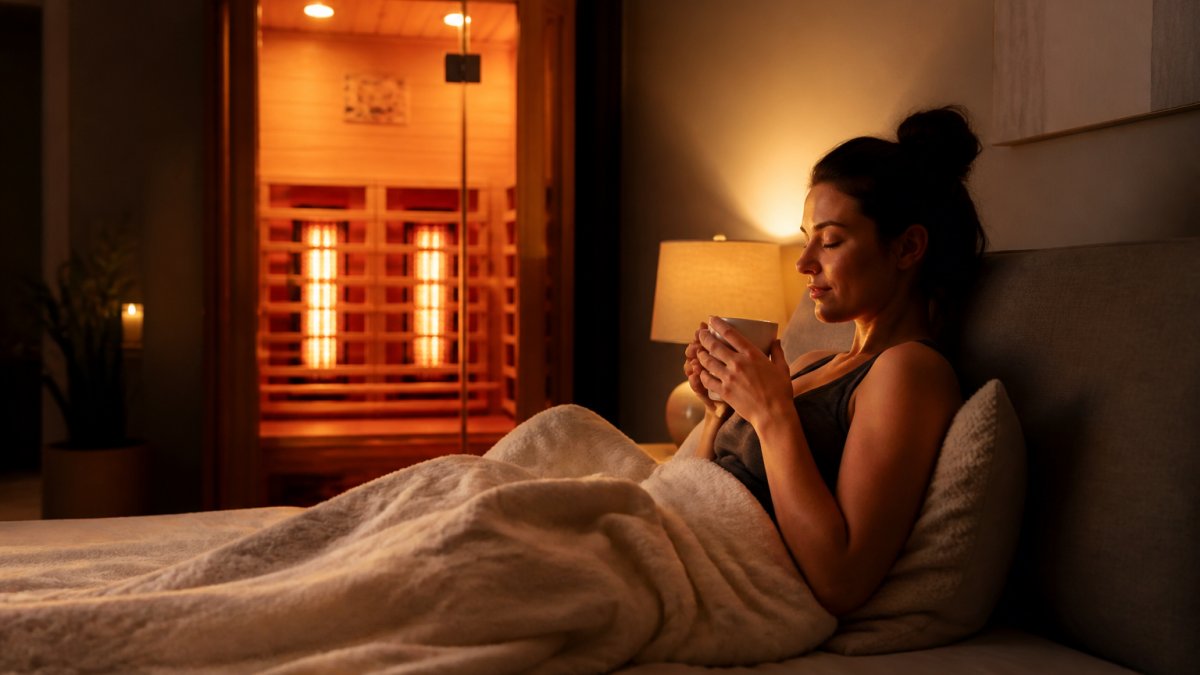
Infrared heat raises your core body temperature, then triggers an aggressive cooldown once you leave the sauna. That post-session temperature drop is what triggers sleep onset and aligns with your circadian rhythm, your internal biological clock governing sleep-wake cycles. Your body naturally lowers core temperature in the evening as part of melatonin production. By using an infrared sauna strategically, you amplify that natural signal. The parasympathetic nervous system activates during cooldown, moving your body from arousal into relaxation.

Infrared wavelengths penetrate tissue more effectively than dry heat, creating deeper thermal stress and a more pronounced recovery response. This dramatic temperature drop after leaving the heat drives sleep latency improvements more reliably than traditional saunas.
Pro Tip The sweet spot for infrared sauna frequency for insomnia isn't about staying in longer; it's about consistent thermal cycling. A regular schedule trains your circadian rhythm more effectively than sporadic sessions.
How Long Should You Use an Infrared Sauna for Sleep Benefits
Most people should spend 20-30 minutes in an infrared sauna for sleep benefits (peer-reviewed research). This duration achieves meaningful core body temperature elevation without excessive physiological stress. Shorter sessions (10-15 minutes) produce minimal thermal cycling. Longer sessions (45+ minutes) don't proportionally increase sleep benefits and carry higher dehydration risk.
Consistency beats duration. A 25-minute session twice weekly creates more reliable sleep improvements than a 45-minute session once monthly. Your body responds to predictable thermal patterns, not marathon sessions.
Session duration depends on individual tolerance and your specific sleep issue. Someone with mild insomnia may see results with 20 minutes, while chronic sleep latency issues might benefit from the full 30 minutes. Start conservatively at 20 minutes to assess your response.
Temperature settings matter as much as time. Most infrared saunas operate between 120-150°F. Lower temperatures (120-130°F) suit beginners or those with heat sensitivity. Higher temperatures (140-150°F) create more intense thermal stress and faster temperature elevation, but require more acclimation.
Key Takeaway Consistency beats duration. A regular 25-minute session twice weekly outperforms occasional longer sessions for sleep improvement.
Recommended Frequency for Infrared Sauna Sessions to Combat Insomnia
The optimal infrared sauna frequency for insomnia is 2-4 times per week (peer-reviewed research). This allows regular thermal cycling without overtraining or metabolic stress. Once-weekly sessions are insufficient to establish circadian rhythm patterns that drive sleep improvement. Daily use risks thermal adaptation, where your body becomes less responsive to heat.
Frequency typically breaks down by insomnia type:
Sleep latency issues (difficulty falling asleep): 3-4 sessions weekly
Sleep maintenance problems (frequent waking): 2-3 sessions weekly
General insomnia: Start with 2 sessions weekly and adjust based on response
Space sessions by at least one day to allow your nervous system to fully activate the parasympathetic response. Back-to-back days create cumulative stress without recovery benefit.
Most people see noticeable sleep improvement within 2-3 weeks of consistent 2-3 sessions weekly (peer-reviewed research). Some experience changes within days, particularly if severely sleep-deprived.
Age, baseline fitness, existing sleep disorders, and medication use influence optimal frequency. Younger individuals often tolerate higher frequency. Older adults typically see better results with slightly lower frequency and longer recovery periods.
Watch Out Increasing frequency without adequate spacing can lead to heat adaptation, where your body becomes desensitized to the thermal stimulus. This reduces the sleep-onset signal. Consistency within a sustainable range is better than escalation.
Best Time of Day for Infrared Sauna to Support Sleep Onset
The best time is 2-4 hours before your intended bedtime. This window allows your core temperature to drop significantly during the post-sauna period, coinciding with your natural evening temperature decline.
Using an infrared sauna too close to bedtime (within 1-2 hours) may create mild physiological arousal that interferes with sleep onset. Using it too early (8+ hours before bed) disconnects the thermal signal from your actual sleep window, reducing effectiveness.
This 2-4 hour window aligns with your body's natural sleep preparation phase. Your circadian rhythm begins signaling melatonin production roughly 2 hours before typical sleep time. The infrared sauna cooldown amplifies this natural signal.
For shift workers or irregular sleep schedules, place your session 2-4 hours before whenever you plan to sleep, regardless of clock time. Your circadian rhythm responds to thermal cues relative to your sleep window, not conventional "evening" timing.
Afternoon sessions (2-5 PM) work well for most people with typical evening sleep schedules. Morning sauna use (before 10 AM) provides wellness benefits but won't meaningfully support that night's sleep onset.
The Infrared Sauna Cooldown Hack: Optimizing Your Post-Session Recovery
What happens after you leave the sauna matters more than what happens inside it. The cooldown phase is where sleep benefits occur. Immediately after exiting, your body begins aggressive vasodilation as blood vessels expand to release heat. This is when core temperature drops most rapidly.
Many people make the mistake of jumping into a cold shower, which creates a shock response that can elevate cortisol and sympathetic nervous system activity, counterproductive for sleep.
Instead, allow 10-15 minutes of passive cooling. Sit in a comfortable room at moderate temperature (68-72°F). Avoid intense activity. This passive cooldown extends parasympathetic activation and allows your body to fully transition into relaxation response. After 10-15 minutes, you can shower with lukewarm water if desired.
Hydrate slowly during the first 15 minutes post-sauna. Rapid large amounts of cold water can create digestive stress. Slow, steady hydration supports the body's natural cooling process.
Wait 30-45 minutes before eating a heavy meal. Eating immediately after sauna diverts blood flow to digestion, interfering with the cooling phase. A light snack (small fruit, handful of nuts) is acceptable 20 minutes post-sauna.
Keep your bedroom slightly cool (65-68°F) to align with the post-sauna temperature drop your body is already experiencing. This environmental alignment strengthens the sleep signal.
Pro Tip The infrared sauna cooldown hack: passive recovery for 10-15 minutes post-session, slow hydration, no cold shocks, and a cool bedroom environment. These elements work together to extend the parasympathetic activation that drives sleep onset.
Safety Considerations and Contraindications for Sleep Disorders
Infrared saunas are generally safe for most people, but certain conditions require caution. If you have untreated or uncontrolled high blood pressure, consult your healthcare provider before using infrared saunas. Heat can temporarily elevate blood pressure.
Pregnancy presents a specific contraindication. Elevated core body temperature during pregnancy, particularly in the first trimester, carries risks. Pregnant individuals should avoid infrared saunas without explicit medical clearance.
Sleep apnea can be complicated by heat exposure. If you have diagnosed sleep apnea, discuss infrared sauna use with your sleep medicine specialist before starting.
Medication interactions matter significantly. If you take medications affecting temperature regulation (some antidepressants, certain blood pressure medications, stimulants), heat exposure can amplify side effects. Review your medication list with a healthcare provider before beginning regular sessions.
Dehydration risk increases with infrared sauna use. Ensure adequate daily hydration, typically 8-10 glasses of water daily for most adults, more if using the sauna multiple times weekly. Signs of inadequate hydration include dizziness, excessive thirst, or dark urine.
Cardiovascular disease requires medical clearance. While moderate heat therapy can benefit some cardiac conditions, acute heart disease or recent cardiac events contraindicate sauna use.
Heat sensitivity or previous adverse reactions to heat warrant caution. Start with shorter, cooler sessions to assess tolerance before committing to regular use.
Creating Your Personalized Infrared Sauna Protocol for Better Sleep
Your infrared sauna frequency for insomnia should reflect your individual circumstances. Building a personalized protocol requires honest assessment of your baseline sleep quality, heat tolerance, and schedule constraints.

Start by establishing your baseline. Track your sleep for one week before beginning sauna sessions. Note sleep latency (how long it takes to fall asleep), total sleep duration, number of nighttime awakenings, and subjective sleep quality. This baseline becomes your comparison point.
Week 1-2 protocol: Begin with once-weekly 20-minute sessions at 130°F, scheduled 3 hours before your typical bedtime. This conservative approach lets your body acclimate without thermal adaptation or sleep disruption.
Week 3-4 protocol: If you tolerate initial sessions well, increase to twice weekly. Maintain 20-minute duration and 130°F temperature. Space sessions by at least 2 days (e.g., Monday and Thursday).
Week 5+ protocol: Based on sleep quality changes, adjust accordingly. If sleep improvement is noticeable, maintain twice-weekly sessions. If minimal improvement, increase to three times weekly while keeping duration and temperature constant. Resist increasing frequency further; consistency beats escalation.
Temperature adjustments come after frequency optimization. Once you've established consistent frequency that works, gradually increase temperature to 135-140°F if desired.
Duration adjustments follow the same principle. After 4-6 weeks at 20 minutes with established frequency, extend to 25-30 minutes if tolerating sessions well. Don't extend duration until you've found your optimal frequency first.
Document your sleep quality weekly using a simple 1-10 scale for subjective quality, track sleep latency in minutes, and note changes in nighttime awakenings. After 4-6 weeks, compare this data to your baseline. Meaningful improvement usually shows as 2-3 point increase in subjective quality and 15-30 minute reduction in sleep latency.
Individual response varies widely. Some people see dramatic improvement at twice-weekly sessions. Others need three times weekly. A few find once-weekly sessions sufficient. Your personal protocol should reflect your actual response.
Share your sauna protocol with any sleep medicine specialist or therapist so they can monitor for interactions with other treatments.
Seasonal adjustments may be necessary. Some people find optimal frequency changes between seasons, particularly with light exposure or circadian rhythm shifts. Winter may require slightly higher frequency; summer might allow reduction. Track this over several months to identify patterns.
The infrared sauna frequency for insomnia that works today may need adjustment in 2-3 months. As your sleep quality improves, your body's responsiveness to thermal stimulus may change. Reassess and adjust your protocol quarterly.
Infrared sauna therapy offers a physiologically grounded approach to insomnia that works with your body's natural temperature regulation and circadian rhythm. The key is matching frequency, timing, and duration to your individual circumstances and monitoring actual sleep quality changes. At FloatWell, we help you build and refine a personalized protocol that fits your life while delivering measurable sleep improvements. Book an appointment to discuss how infrared sauna therapy can address your specific sleep challenges and get started with a protocol tailored to your needs.
Protocol Phase | Frequency | Duration | Temperature | Timing Before Bed |
Initial (Week 1-2) | 1x weekly | 20 minutes | 130°F | 3 hours |
Building (Week 3-4) | 2x weekly | 20 minutes | 130°F | 3 hours |
Optimization (Week 5+) | 2-3x weekly | 20-30 minutes | 130-140°F | 2-4 hours |
Maintenance | 2-4x weekly | 25-30 minutes | 135-145°F | 2-4 hours |
Frequently Asked Questions
Does infrared sauna help with insomnia?
Infrared sauna can support better sleep by triggering a hypothermic rebound effect. When your core body temperature drops after leaving the sauna, it signals your body to initiate sleep. The heat therapy also reduces cortisol levels and activates the parasympathetic nervous system, which promotes relaxation. However, results vary by individual, and timing matters significantly, using the sauna too close to bedtime may increase physiological arousal instead of promoting sleep onset.
What is the recommended frequency for infrared sauna sessions to aid sleep?
For insomnia management, most people benefit from 3-4 infrared sauna sessions per week. Starting with 2-3 sessions weekly allows your body to adapt to the thermal stress and recovery protocol. Some individuals see improvements with twice-weekly sessions, while others require more frequent use. Consistency matters more than intensity, regular sessions help establish a predictable sleep hygiene routine and optimize your circadian rhythm over time.
How long should I use an infrared sauna for sleep benefits?
The optimal session duration for sleep support ranges from 20-30 minutes. Sessions under 15 minutes may not trigger sufficient vasodilation and thermal regulation to produce the cooling rebound effect needed for sleep latency improvement. Sessions exceeding 40 minutes can cause excessive physiological stress and dehydration. Most people find 25 minutes strikes the right balance, long enough to raise core body temperature meaningfully, but not so long that recovery takes hours.
What is the best time of day to use an infrared sauna for insomnia?
Use your infrared sauna 2-3 hours before bedtime. This timing allows your core body temperature to drop naturally during the hypothermic rebound phase, aligning with your body's natural sleep onset process. Avoid sessions within 1-2 hours of sleep, as residual heat can interfere with sleep architecture. Morning or early afternoon sessions support circadian rhythm regulation but may not directly enhance that night's sleep quality.
What is the infrared sauna cooldown hack for better sleep?
After your sauna session, gradually cool down rather than jumping into cold water or air conditioning. Spend 10-15 minutes in a warm room, then gradually transition to cooler temperatures. This controlled descent amplifies the hypothermic rebound effect and extends the parasympathetic activation window. Some people find a warm shower followed by cool air effective. Avoid sudden temperature shocks, which can trigger stress responses that counteract the relaxation benefits you just earned.
Can infrared saunas help with sleep apnea or other specific sleep disorders?
Infrared saunas may support general sleep quality, but they are not a treatment for sleep apnea or other diagnosed sleep disorders. If you have sleep apnea, narcolepsy, or another clinical condition, consult a qualified sleep medicine professional before starting sauna therapy. Some conditions may be contraindicated due to cardiovascular stress during heat exposure. A healthcare provider can assess whether infrared sauna is safe and appropriate for your specific situation.
How long does it take to see sleep improvements from infrared sauna use?
Most people notice initial changes in relaxation within 1-2 weeks of consistent use, though measurable improvements in sleep latency and sleep quality typically emerge after 3-4 weeks. Your body needs time to adapt to the thermal stress and establish the recovery protocol as part of your sleep hygiene routine. Full benefits often develop over 6-8 weeks of regular sessions. Individual variation is significant, some notice faster improvements while others require longer adaptation periods.
EXTERNAL CITATIONS:
National Sleep Foundation sleep health recommendations
Mayo Clinic guidance on sauna use and cardiovascular health
Journal of Human Kinetics research on thermal therapy and parasympathetic nervous system activation
Book an Appointment
This article was written using GrandRanker
Comments