How Heat Therapy Helps Regulate Circadian Rhythm Disorders

Table of Contents
How Heat Therapy Helps Regulate Circadian Rhythm Disorders
The Body Temperature-Sleep Connection
What the Evidence Says About Heat and Sleep Timing
What the research consistently supports
What the evidence does not show
How to read the effect sizes realistically
Where heat fits relative to other circadian tools
Warm Bath Before Bed for Sleep: Timing and Temperature
How to Take a Sleep-Supporting Bath
Infrared Sauna and Sleep: What to Expect
Sauna Session Length and Frequency
Circadian Rhythm Sleep Disorders Treatment: Where Heat Fits
Heat Therapy Safety Before Bed: Who Should Be Cautious
Absolute contraindications: skip heat therapy
Relative contraindications: get medical clearance first
Warning signs: stop immediately
Skin safety and session limits
A quick pre-session checklist
Building a Realistic Evening Heat Routine
Frequently Asked Questions
Last Updated: October 21, 2026
How Heat Therapy Helps Regulate Circadian Rhythm Disorders
Your body clock runs on temperature. That is the core idea behind how heat therapy helps regulate circadian rhythm disorders, and why a warm bath at night can do more than relax you. Timing matters more than the heat itself: get it right and you give your internal clock a clear signal; get it wrong and you simply feel warm.
Below, we break down the evidence, a safe evening routine, and where heat fits next to other circadian rhythm sleep disorders treatment.
The Body Temperature-Sleep Connection
Core body temperature follows a daily rhythm, and sleep begins as that temperature falls. (The Temperature Dependence of Sleep) This drop is one of the strongest signals your brain uses to start sleep.
In practice:
Body temperature peaks in the late afternoon and early evening.
It falls in the hours before bed.
It reaches its lowest point in the early morning.
Heat therapy nudges this curve. Warm water or a sauna raises your skin temperature and sends blood to the surface; when you step out, your body releases that heat fast, and that rapid cooling is the signal your brain reads as "time to sleep." The key point: you are not trying to stay hot, you are trying to trigger the cooldown that follows.
What the Evidence Says About Heat and Sleep Timing
Most guides on heat and sleep either oversell a warm bath as a cure for insomnia or wave at "research" without saying what was measured. Here is what the evidence supports, suggests, and does not show.
What the research consistently supports
Passive body heating, warm baths, hot showers, and saunas, has a consistent, modest effect on sleep-onset latency, the time it takes to fall asleep. The pattern across studies is that when core body temperature is raised roughly one to two hours before bedtime and then allowed to fall, people fall asleep faster than on control nights. The sleep and body temperature research from the National Institutes of Health describes this as a well-replicated relationship between the evening temperature decline and sleep initiation.
What the evidence is weaker on:
Sleep efficiency (time asleep divided by time in bed) shows smaller and less consistent improvements than sleep-onset latency.
Slow-wave sleep (deep sleep) may increase slightly in some studies, but the effect is not reliable enough to promise.
Total sleep time is generally not meaningfully changed by a single bath or sauna session.
What the evidence does not show
No well-controlled research supports the claim that a warm bath or sauna treats a diagnosed circadian rhythm sleep disorder on its own. Heat is an adjunct, not a treatment, and works best layered on the established anchors: a fixed wake time, morning light exposure, and a clinical review if symptoms persist. Circadian rhythm disorders each have different underlying clock problems, so a single evening heat habit cannot correct a misaligned clock; it can only make the sleep window you already have easier to enter.
How to read the effect sizes realistically
When you see a study reported as "warm baths improve sleep," ask three questions:
What was measured? Falling asleep faster is not the same as sleeping better through the night.
Compared to what? A bath versus no bath is weaker than a bath versus a consistent bedtime routine.
For whom? Most studies use healthy adults or people with mild sleep complaints, not diagnosed circadian disorders.
A reasonable expectation is a modest shortening of time to fall asleep on nights you use heat correctly, with little change to total sleep time. Heat will disappoint anyone looking for a dramatic fix, but it earns its place as one reliable lever in a consistent routine.
Pro Tip Track your own response instead of relying on averages. Note your bedtime, lights-out time, and estimated minutes to fall asleep on heat nights versus non-heat nights for two to three weeks. A personal pattern is more useful than a population average.
Where heat fits relative to other circadian tools
Tool | Primary effect | Evidence strength |
Morning bright light | Phase-advances the clock | Strong |
Fixed wake time | Anchors the rhythm | Strong |
Evening heat (bath or sauna) | Shortens sleep-onset latency | Moderate |
Melatonin (clinician-guided) | Shifts timing | Moderate to strong, depends on timing |
Caffeine and alcohol control | Protects sleep quality | Moderate |
The takeaway: heat is a supporting habit with moderate evidence for one specific outcome, falling asleep faster. It is not a phase-shifting treatment, and it should not replace the tools with stronger evidence.
Warm Bath Before Bed for Sleep: Timing and Temperature
A warm bath before bed for sleep works best when you finish 60 to 90 minutes before lights out, so the temperature drop lines up with bedtime.

How to Take a Sleep-Supporting Bath
Pick your window. Start the bath 90 minutes before bed.
Keep the water warm, not scalding. Test it with your hand first.
Soak for 10 to 15 minutes. Longer is not better.
Dim the lights. Bright bathroom lighting works against your goal.
Dry off and cool down. Step into a cool room and let your body release heat.
Go to bed within the hour. The cooldown is the signal, so do not wait too long.
Pro Tip The cooldown after the bath does the work, not the soak. If you climb straight into a heavy blanket and stay warm, you blunt the effect. Let your body cool for a few minutes first.
Infrared Sauna and Sleep: What to Expect
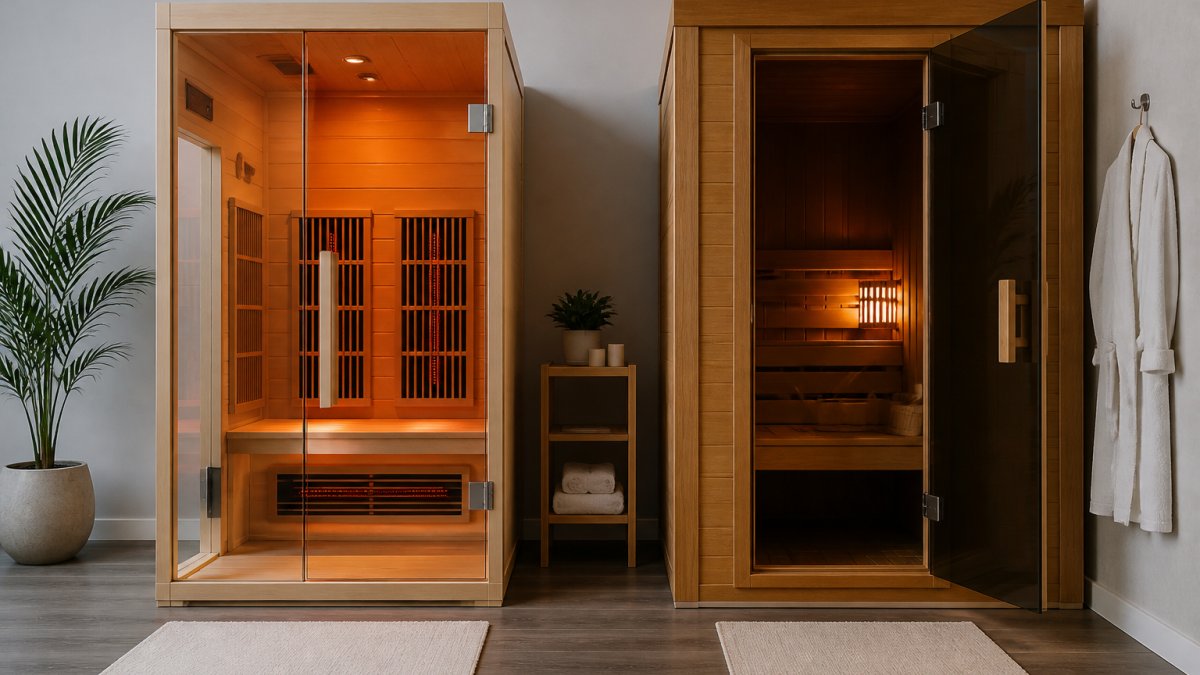
Infrared sauna and sleep benefits follow the same logic as a warm bath, with a longer, deeper warm-up. The sauna raises your skin and tissue temperature, and the cooldown afterward can help you feel sleepy. Expect a gentle effect: many people report falling asleep faster on sauna evenings, while others notice little change at first. Timing is the whole game, a sauna too close to bed can leave you wired, so give yourself at least an hour, ideally two, between the sauna and sleep.
Sauna Session Length and Frequency
Length: 10 to 20 minutes per session for most people.
Frequency: two to four sessions per week is a common starting point.
Timing: finish at least 60 to 90 minutes before bed.
Watch Out Sitting in a sauna for too long, or too late in the evening, can raise your core temperature right when you need it to fall. That backfires and makes it harder to fall asleep. ::: (Source: studies on the impact of passive body heating on sleep) At FloatWell, our infrared saunas give you a controlled, guided session, so you are not guessing at length or timing on your own. Circadian Rhythm Sleep Disorders Treatment: Where Heat Fits Circadian rhythm sleep disorders treatment starts with the basics: a fixed sleep schedule, morning light, and a review with a qualified professional. Here is where it fits: Book an Appointment → Approach What It Does When to Use It Morning light Resets the clock forward Within an hour of waking Fixed schedule Anchors the rhythm Every day, same times Evening heat Triggers the cooldown 60-90 minutes before bed Medical care Diagnoses and treats disorders When symptoms persist Heat therapy helps regulate circadian rhythm disorders best when paired with the other three. Use it as the evening anchor in a broader plan. Set realistic expectations. Most people notice small improvements over a few weeks, not overnight. Heat Therapy Safety Before Bed: Who Should Be Cautious Heat therapy is low-risk for most healthy adults, but "low-risk" is not "no-risk." A safe evening bath versus a bad night often comes down to your circulation, sensation, medications, and how well you cool down afterward. Absolute contraindications: skip heat therapy Do not use a sauna, hot bath, or any passive heating session if any of the following apply: You have uncontrolled high blood pressure or unstable heart disease. Heat shifts blood flow to the skin and raises heart rate, which an unstable cardiovascular system may not tolerate. You have a fever or an active infection. Raising core temperature further is counterproductive. You are intoxicated or have used alcohol or recreational drugs. Alcohol impairs your ability to sense overheating and cool down, and combined with sauna use has been linked to serious cardiac events. Relative contraindications: get medical clearance first These conditions do not rule out heat therapy, but warrant a clinician conversation first: Diabetes with peripheral neuropathy. Reduced sensation in the feet and legs means you may not feel a burn or excessive heat until damage is done. Peripheral vascular disease or poor circulation. Impaired blood flow can blunt the cooling response and raise the risk of dizziness or skin injury. Medications that affect sweating or temperature regulation. Anticholinergics, some antidepressants, diuretics, beta blockers, and stimulants can interfere with heat dissipation. Ask your pharmacist about heat-sensitivity warnings. Warning signs: stop immediately End the session and cool down if you notice: Dizziness, lightheadedness, or faintness Nausea or a sudden headache Rapid heartbeat that does not settle within a few minutes of cooling If symptoms do not resolve within 15 to 20 minutes of cooling down and drinking water, seek medical advice. If someone becomes confused, collapses, or stops sweating in a hot environment, treat it as a heat emergency and call for help. Skin safety and session limits Bath water: comfortably warm, not scalding, no hotter than a young child's bath; test with your hand or wrist first. Sauna: limit sessions to 10 to 20 minutes, especially for first-timers. Sit on a towel and leave immediately if you feel unwell. Cool-down: let your body release heat for at least 10 to 15 minutes before getting into bed or bundling up. Never fall asleep in a hot bath or sauna. Drowsiness in heat is a sign to get out, not to stay in. Set a timer if you are prone to losing track of time.
A quick pre-session checklist
Before your first week of heat sessions, run through this list:
Do I have any condition on the absolute contraindication list? If yes, do not proceed.
Do I have any condition on the relative list? If yes, has a clinician cleared me?
Am I on any medication that affects sweating or temperature? If unsure, ask a pharmacist.
Do I have a timer set and water within reach?
Do I know the warning signs and when to stop?
Key Takeaway Heat therapy is generally safe for healthy adults, but safety is personal. If you have a cardiovascular condition, diabetes with nerve damage, a heat-sensitive condition, or take medications that affect temperature regulation, get medical clearance before adding sauna or hot-bath sessions to your evening routine.
Building a Realistic Evening Heat Routine
A routine you can keep beats a perfect one you abandon. Here is a simple plan for most evenings.
7:00 p.m. Dim the lights and put screens away.
7:30 p.m. Take a warm bath or a short sauna session.
8:00 p.m. Cool down in a comfortable room.
Keep the schedule steady, even on weekends. Consistency is what teaches your clock.
If you want guided support, FloatWell offers infrared sauna sessions as part of a whole-body wellness plan. We also accept HSA cards, which can help make regular sessions easier to fit into your budget.
Frequently Asked Questions
Can heat therapy help regulate circadian rhythm disorders?
Heat therapy may support circadian rhythm regulation by influencing the body's core temperature cycle, which is closely tied to sleep-wake timing. Warm baths or saunas in the evening can help trigger the natural temperature drop that signals the body to sleep. However, heat therapy is not a standalone cure for circadian rhythm sleep disorders treatment. It works best as part of a broader plan that may include light exposure management, consistent sleep schedules, and guidance from a healthcare provider. Individual responses vary, so track your sleep patterns to see what helps.
Does a warm bath before bed improve sleep?
A warm bath before bed for sleep can help some people fall asleep faster. The key is timing: bathing 1 to 2 hours before bedtime allows your body to cool down afterward, which mimics the natural temperature drop that precedes sleep. Water temperature around 100 to 104°F (38 to 40°C) for 10 to 20 minutes is a common starting point. Results vary by person, and a bath is not a substitute for treating an underlying sleep disorder. If insomnia persists, consult a healthcare professional.
Can an infrared sauna affect your circadian rhythm?
An infrared sauna and sleep quality may be linked because sauna use raises core body temperature, and the subsequent cooling process can promote relaxation and drowsiness. Some people find that a sauna session 1 to 2 hours before bed helps them wind down. However, research on infrared sauna and circadian rhythm is limited. Avoid sauna use too close to bedtime if it leaves you feeling energized or overheated. Start with shorter sessions and observe how your sleep responds over a few weeks.
Is heat therapy safe before bed for people with sleep disorders?
Heat therapy safety before bed depends on your health status. Warm baths and saunas are generally safe for most healthy adults when used with caution. People with cardiovascular conditions, low blood pressure, diabetes, or pregnancy should consult a doctor first. Avoid overheating, stay hydrated, and never fall asleep in a bath or sauna. If you have a diagnosed circadian rhythm sleep disorder, discuss heat therapy with your provider as part of your overall treatment plan rather than using it alone.
Your body clock responds to signals, and temperature is one of the strongest. If disrupted sleep has become a pattern, a steady evening heat routine is a simple place to start. FloatWell offers infrared sauna sessions, float therapy, and cryotherapy to support recovery and rest, with HSA card acceptance and a team that guides you on safe timing. Book an appointment with FloatWell and build an evening routine that works with your body, not against it.
Book an Appointment
Comments