How to Prepare for Your First Cryotherapy Session

Table of Contents
What to Wear to Cryotherapy: Your Cryo Chamber Outfit
Protective Gear You'll Be Given
How Long Does a Cryotherapy Session Last?
Cryotherapy Safety Guidelines and Contraindications
How the Cold Affects Your Body
Conditions That Require a Doctor's Clearance
Screening Questions You Should Be Ready to Answer
In-Chamber Safety Protocols
Who Should Not Use Cryotherapy
Step-by-Step: How to Prepare for Your First Cryotherapy Session
1. Hydrate and Fuel Your Body
2. Prepare Your Skin
3. Mental Preparation and Breathing Techniques
What to Expect During Your Cryotherapy Session
Post-Session Recovery: Re-warming and Movement
Why Re-Warming Matters
The 10-Minute Re-Warming Protocol
What to Avoid Right After
How You Should Feel 30 Minutes Later
Comparison of Cryotherapy Types: Whole-Body vs. Partial
Conclusion
Frequently Asked Questions
Last Updated: September 22, 2026
What to Wear to Cryotherapy: Your Cryo Chamber Outfit
What you wear to cryotherapy matters more than most people expect. The right outfit protects your skin and keeps the session comfortable. At FloatWell, we walk every first-timer through this before they step into the cryo chamber.

Here is the short answer:
Men: Wear dry, loose-fitting shorts or boxer briefs.
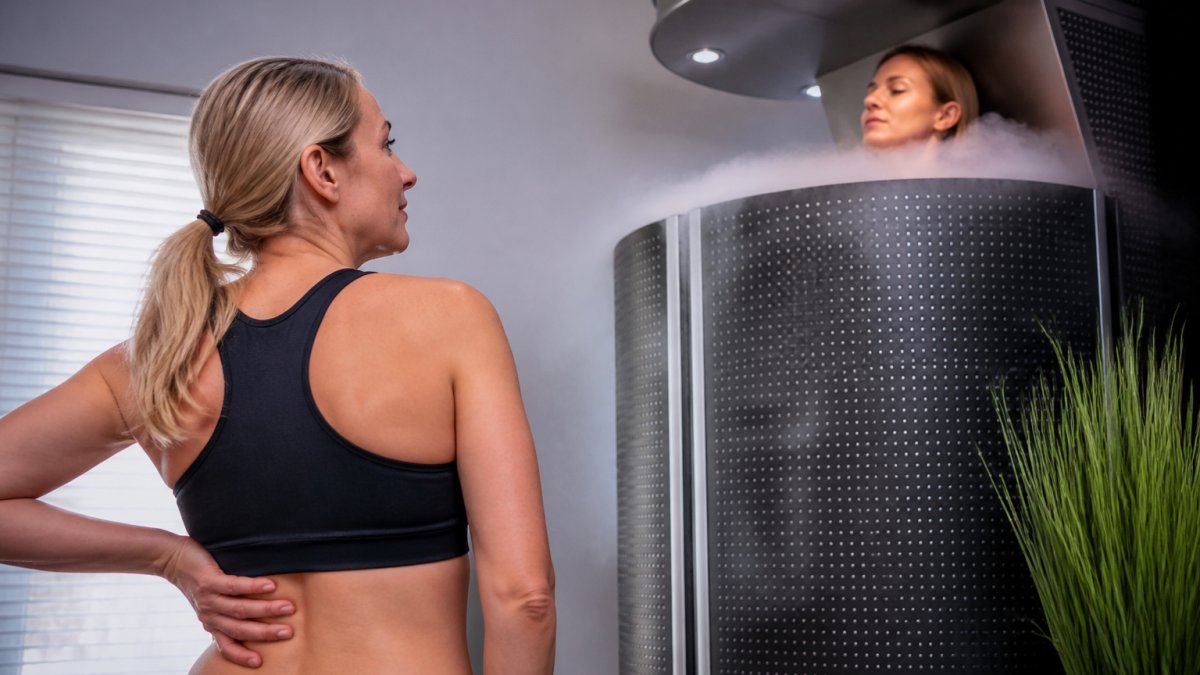
Women: Wear a sports bra, tank top, and shorts.
Everyone: Skip the lotion, perfume, and heavy makeup.
Protective Gear You'll Be Given
You will not face the cold in just your clothes. Staff hand you gear before you enter the chamber:
Dry socks to protect your toes and feet
Non-slip slippers so you stay steady on the platform
Gloves or mittens to shield your fingers
Ear protection or a headband for your ears
A mask to cover your nose and mouth
How Long Does a Cryotherapy Session Last?
A whole-body cryotherapy session lasts just two to three minutes. That is the whole thing. Most first-timers are surprised by how fast it goes.
Here is the full timeline:
Phase | Time | What Happens |
Check-in and screening | 5-10 min | Health questions, gear fitting |
Pre-session briefing | 2-3 min | Breathing tips, safety rules |
Time in the chamber | 2-3 min | Cold exposure at sub-zero temperatures |
Re-warming | 5-10 min | Light movement, warm room |
Total visit | 20-30 min | Door to door |
Cryotherapy Safety Guidelines and Contraindications
Cryotherapy safety starts with honest answers during your screening. The cold is safe for most healthy adults, but it is not right for everyone. A short consultation before your first session helps staff flag any risk.
How the Cold Affects Your Body
When you step into a cryo chamber, your body responds with vasoconstriction, blood vessels near the skin narrow to preserve core temperature. Blood flow shifts inward, and your heart works harder to circulate it. This is the same response that drives the reported recovery and mood benefits, but it is also why certain conditions make cryotherapy risky.
Conditions That Require a Doctor's Clearance
Talk to your physician before booking if you have any of the following:
Heart conditions or uncontrolled high blood pressure. Vasoconstriction increases cardiac workload. If your heart is already strained, the sudden demand can be dangerous.
Poor circulation or a history of blood clots. Reduced blood flow to extremities can worsen existing circulatory problems.
Raynaud's syndrome or cold sensitivity. In Raynaud's, cold triggers an exaggerated vasospasm in fingers and toes, causing them to turn white or blue. A cryo chamber can provoke a severe episode.
Pregnancy. The effects of extreme cold on fetal development are not well studied, and most providers advise against it as a precaution.
Open wounds, sores, or recent surgery. Cold slows healing and can damage tissue that is already compromised.
Diabetes with peripheral neuropathy. If you cannot reliably feel cold or pain in your feet, you may not notice frostbite developing.
Under 18. Most facilities require guardian consent, and some set a minimum age entirely.
Screening Questions You Should Be Ready to Answer
A responsible facility will ask about:
Any diagnosed heart or vascular condition
Current medications, especially blood pressure or blood-thinning drugs
Recent injuries, surgeries, or open wounds
Pregnancy status
History of cold-related reactions like hives or Raynaud's
Alcohol or substance use in the past 24 hours
Answer honestly. The screening exists to protect you, not to upsell you.
In-Chamber Safety Protocols
Keep your hands, feet, and ears covered at all times.
Step out right away if you feel dizzy, numb, or short of breath.
Never hold your breath. Breathe normally.
Tell staff about any heart condition, high blood pressure, or circulation problem before you enter.
Avoid alcohol before your session.
The FDA guidance on cryotherapy devices notes that whole-body cryotherapy carries real risks, including frostbite and breathing hazards. Report any discomfort immediately.
Watch Out Frostbite and cold burns are the most common injuries from improper cryotherapy. They typically occur when protective gear is missing, wet, or poorly fitted. Always let staff check your gloves, socks, and mask before you step in.
Who Should Not Use Cryotherapy
Some people should skip whole-body cryotherapy entirely rather than seek clearance. If you have an active infection, a pacemaker, or a known allergy to extreme cold, do not book a session without explicit medical approval.
Step-by-Step: How to Prepare for Your First Cryotherapy Session
Learning how to prepare for your first cryotherapy session comes down to three steps: fuel your body, protect your skin, and calm your mind. Do these and the cold becomes far less intimidating.
1. Hydrate and Fuel Your Body
Drink water in the hours before you go. Good hydration levels help your body handle the thermal shock of cold exposure.
Drink 16 to 20 ounces of water in the two hours before your appointment.
Eat a light snack if you are hungry. Do not arrive on an empty stomach.
Skip alcohol and heavy meals right before your session.
Avoid caffeine if you are prone to jitters. (Source: research on the physiological effects of cold exposure)
2. Prepare Your Skin
Dry, clean skin handles the cold best. Moisture on your skin can freeze and cause irritation.
Shower before you arrive, then dry off fully.
Skip lotion, oils, and creams on session day.
Remove all jewelry, including rings and piercings.
Do not apply perfume or scented products.
3. Mental Preparation and Breathing Techniques
The cold triggers a natural gasp. That is normal. The trick is to control your breathing before it controls you.
Try this before you step in:
Take three slow, deep breaths through your nose.
Exhale slowly through your mouth.
Keep a steady rhythm once inside.
Focus on one spot on the wall ahead of you.
Pro Tip Count your breaths instead of watching the clock. Two to three minutes passes faster when your mind has a simple job. Most people who struggle with the cold are holding their breath without realizing it.
What to Expect During Your Cryotherapy Session
The first 30 seconds feel the coldest. After that, your body starts to adapt. This is called acclimatization, and it happens fast.
Here is the sequence you will feel:
Seconds 1-10: A sharp cold rush across your skin.
Seconds 10-30: Your heart rate rises and blood flow shifts toward your core.
Seconds 30-90: The cold feels steady. Your skin goes numb.
Final minute: Endorphin release kicks in. Many people feel a wave of alertness.
Post-Session Recovery: Re-warming and Movement
Your body needs 5 to 10 minutes to re-warm after a cryotherapy session. Do not rush back into your day. A slow re-warm protects your muscles and helps you keep the benefits.
Why Re-Warming Matters
During your session, vasoconstriction pushed blood away from your skin and into your core. When you step out, those vessels dilate again. If you warm up too fast, say, with a hot shower, the sudden rush of blood to the surface can make you lightheaded. If you warm up too slowly, you may start shivering, which burns energy and can leave you feeling drained rather than refreshed.
The goal is a gradual, active re-warm.
The 10-Minute Re-Warming Protocol
Minutes 0-2: Walk it out. Take slow laps around the lounge or hallway. Movement generates heat from the inside rather than applying it externally.
Minutes 2-5: Layer up. Put on dry, warm clothing, a hoodie, sweatpants, socks. Dry fabric traps heat; damp fabric pulls it away.
Minutes 5-8: Light stretching. Focus on legs, back, and shoulders. Gentle range-of-motion work keeps blood moving without spiking your heart rate.
Minutes 8-10: Hydrate. Drink 8 to 12 ounces of water. Cold exposure can dehydrate you even though you were not sweating.
After 10 minutes: Warm shower is fine. Once your core temperature feels normal and any shivering has stopped, a warm (not hot) shower is safe.
What to Avoid Right After
Hot showers or saunas immediately. The temperature swing can cause dizziness.
Intense exercise. Give your body 15 to 20 minutes before hard training.
Alcohol. It dilates blood vessels and can worsen lightheadedness.
Driving if you feel off. Sit in the lounge until you feel fully steady.
Pro Tip If you start shivering, do not fight it. Shivering is your body's way of generating heat. Add a layer, keep walking, and let it pass. Forcing yourself to stay still will make it last longer.
How You Should Feel 30 Minutes Later
Most people report a lingering sense of alertness and reduced soreness. Some feel sleepy. Both are normal. If you feel nauseous, dizzy, or notice numbness in your fingers or toes that does not fade within 15 minutes, tell staff and consider contacting a healthcare provider.
Watch Out Never drive immediately if you feel lightheaded. Sit in the lounge area until you feel fully steady. Skipping this step is the most common first-timer mistake.
Comparison of Cryotherapy Types: Whole-Body vs. Partial
Whole-body cryotherapy treats your entire body in a cryo chamber. Partial cryotherapy targets one area, like a knee or shoulder. Each type fits different recovery goals.
Feature | Whole-Body | Partial (Localized) |
Coverage | Entire body | One targeted area |
Session length | 2-3 minutes | 5-10 minutes |
Best for | Full-body recovery, mood, energy | Joint pain, one sore muscle |
Gear needed | Gloves, socks, slippers, mask | Minimal |
Feel | Intense whole-body cold | Focused, less intense |
Conclusion
A first cryotherapy session can feel like a big unknown. The cold is real, but so is the preparation that makes it manageable. Dress right, hydrate, breathe, and re-warm slowly.
Frequently Asked Questions
What should you not do before cryotherapy?
Avoid alcohol and caffeine immediately before your session, as they can affect hydration and circulation. Don't apply lotions, oils, or creams to your skin, since these can block the cold and cause discomfort. Skip strenuous exercise right before, as your body needs to be in a rested state. Also, avoid shaving or exfoliating the day of your session to prevent skin irritation. If you have any open cuts or wounds, reschedule until they heal.
How long does a cryotherapy session last?
A whole-body cryotherapy session typically lasts between two and four minutes. The exact time depends on your comfort level and the provider's protocol. Most first-timers start with two minutes and gradually increase. Partial cryotherapy, such as localized treatment, may take five to ten minutes. Always follow the technician's guidance, and never exceed the recommended time to avoid cold-related risks.
Do you wear clothes in cryotherapy?
For whole-body cryotherapy, you wear minimal clothing to allow the cold to reach your skin. Typically, men wear shorts and women wear shorts and a sports bra or swimsuit. You'll also be given protective gear: dry socks, non-slip slippers, and gloves to protect your extremities. Some facilities provide a headband for your ears. Avoid wearing metal jewelry, as it can conduct cold and cause discomfort.
What are the contraindications for whole-body cryotherapy?
Whole-body cryotherapy is not safe for everyone. Contraindications include pregnancy, severe hypertension, heart conditions, Raynaud's phenomenon, cold allergies, and open wounds. If you have diabetes, poor circulation, or a history of blood clots, consult your doctor first. Always disclose your full medical history during the initial consultation. A qualified professional can help determine if cryotherapy is appropriate for you.
Book an Appointment

Comments