Combining Cryotherapy and Infrared Sauna for Recovery

Table of Contents
Why Combine Cryotherapy and Infrared Sauna for Recovery
How Heat and Cold Therapy Work in Your Body
Infrared Sauna and Cryotherapy Order: Sequencing Your Session
How Long Should I Use an Infrared Sauna During Recovery
Contrast Therapy for Muscle Recovery: The Complete Protocol
Recovery Goals and Training Timing
Between-Session Transitions and Acclimation
Infrared Sauna Safety and Hydration: What You Need to Know
Who Should Avoid This Combination
Hydration and Acclimation Essentials
Measuring Your Results and Adjusting Your Protocol
Common Mistakes to Avoid
Frequently Asked Questions
Last Updated: October 16, 2026
Why Combine Cryotherapy and Infrared Sauna for Recovery
Combining cryotherapy and infrared sauna for recovery is one of the most effective protocols for accelerating muscle repair and reducing soreness after intense training or injury. At FloatWell, we are dedicated to providing recovery and relief through scientifically proven techniques and technologies. (Source: heat shock proteins)
The science is straightforward: heat therapy and cold therapy trigger different healing responses in your body. When you use them together in the right sequence, they amplify each other's benefits. Heat increases blood flow and relaxes muscles. Cold reduces inflammation and numbs pain.
This isn't a luxury add-on. Athletes, office workers dealing with chronic tension, and people recovering from injuries all benefit from this approach. The key is understanding how to sequence the treatments, how long to stay in each one, and when to use this protocol relative to your training or daily stress.

How Heat and Cold Therapy Work in Your Body
Heat and cold create opposite but complementary effects on your physiology. Understanding these differences is essential before you combine them.
What Infrared Sauna Does
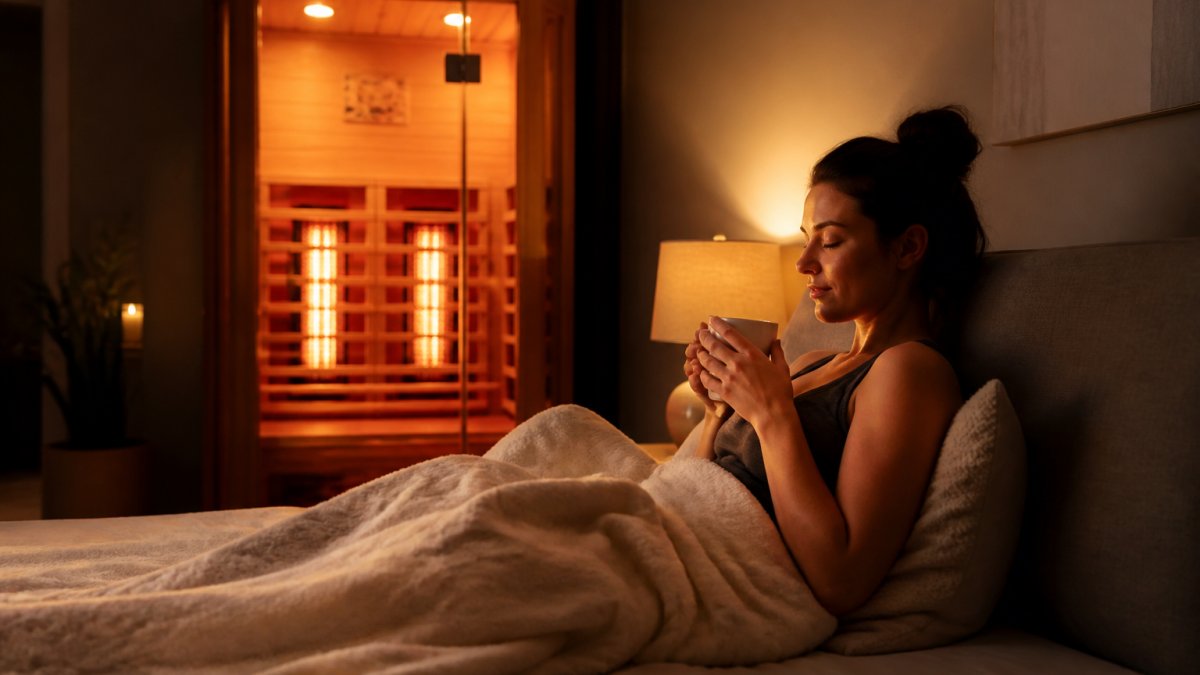
An infrared sauna uses infrared light to heat your body from the inside out. Unlike traditional saunas that heat the air around you, infrared penetrates your skin and tissues directly.
Here's what happens when you use an infrared sauna:
Your core body temperature rises
Blood vessels dilate, increasing circulation
More blood flows to muscles and organs
Metabolic rate increases temporarily
Muscles relax as tension decreases
Your body begins sweating to cool down
The result is improved circulation and blood flow throughout your body. This accelerates healing by delivering oxygen and nutrients to damaged tissue. Heat also triggers the release of heat shock proteins, which help repair muscle damage at the cellular level (Skeletal muscle heat shock protein 70). For muscle recovery, this means faster repair and reduced soreness over time.
What Cryotherapy Does
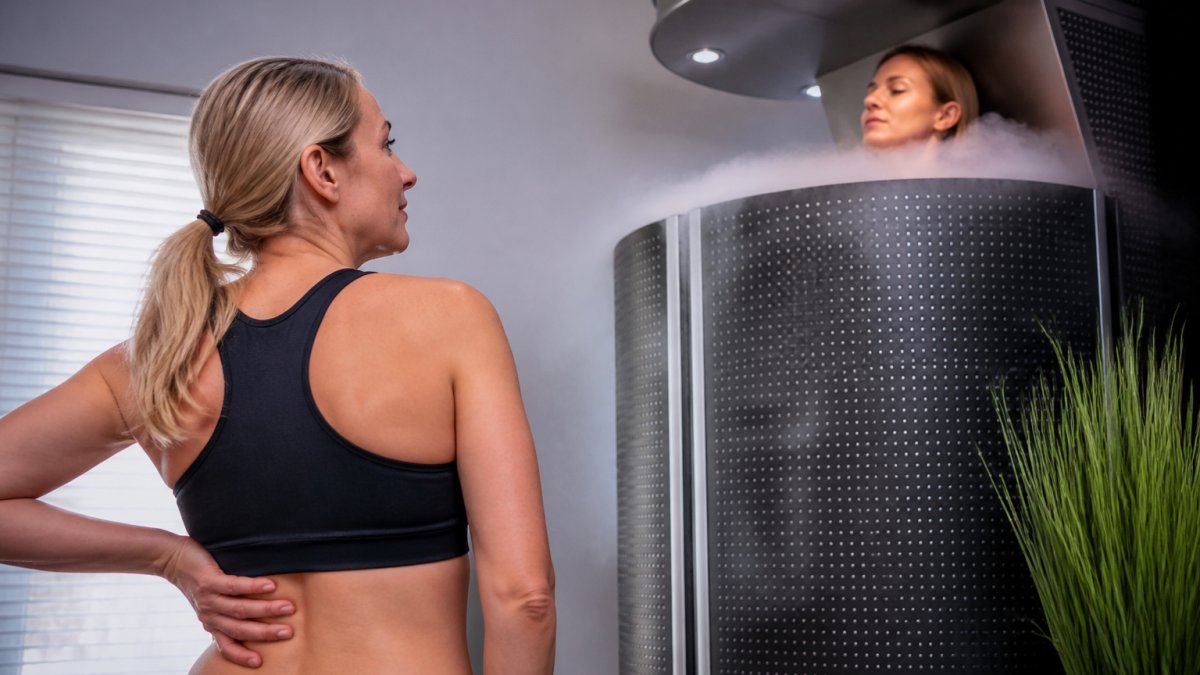
Cryotherapy exposes your body to extreme cold, typically between -200 and -300 degrees Fahrenheit, for 2-3 minutes. The cold triggers an immediate physiological response.
When you experience cold exposure:
Blood vessels constrict to preserve core body heat
Inflammation markers decrease
Pain signals are temporarily reduced
Your nervous system activates a stress response
Endorphins (natural pain-relieving chemicals) are released
Recovery-supporting hormones are stimulated
Cold therapy is particularly effective immediately after intense training or injury. It slows inflammation, which can otherwise spiral into chronic pain. The temporary numbing effect provides immediate relief. Over time, regular cold exposure improves your body's ability to manage inflammation naturally.
Infrared Sauna and Cryotherapy Order: Sequencing Your Session
The order matters. Most people get better results following a specific sequence rather than randomizing which treatment comes first.
The evidence-informed approach is: cold first, then heat.
Here's why. After intense training, inflammation is already elevated. Starting with cryotherapy reduces that inflammation quickly. Your nervous system also recovers faster when cold comes first. Then, when you move to the infrared sauna, the heat builds on that foundation by increasing circulation to support healing.
The sequence works like this:
Complete your cryotherapy session (2-3 minutes in the chamber)
Allow 10-15 minutes for your body to return to normal temperature
Enter the infrared sauna for your heat session
Relax for your full infrared sauna duration
This order prevents your body from becoming overstressed by too much temperature change too quickly. The transition period between treatments is critical. Use this time to hydrate, rest, and let your nervous system settle.
Some athletes reverse this sequence and report good results, particularly if their goal is relaxation rather than acute inflammation reduction. Experiment with both orders and track how you feel over a week or two. Your individual response matters more than rigid protocol adherence.
How Long Should I Use an Infrared Sauna During Recovery
The ideal infrared sauna duration depends on your experience level and recovery goal. Most people see benefits between 20-40 minutes per session.
Beginners: Start with 15-20 minutes. Your body needs time to acclimate to the heat. Shorter sessions reduce the risk of dizziness or overheating. After 3-4 sessions, you can gradually extend duration.
Experienced users: 30-40 minutes is the sweet spot for most recovery goals. This duration allows deep tissue heating and sustained circulation improvement without excessive stress on your cardiovascular system.
Key timing considerations:
Never exceed 45 minutes in a single session
More time doesn't equal better results after 40 minutes
Consistency matters more than duration (3 sessions per week beats one 60-minute session)
Adjust based on how you feel, not on a fixed schedule
The contrast therapy protocol at FloatWell combines infrared sauna with cryotherapy.
Contrast Therapy for Muscle Recovery: The Complete Protocol
Contrast therapy, alternating between heat and cold, is more powerful than either treatment alone. This is where combining cryotherapy and infrared sauna for recovery becomes a complete system rather than two separate treatments.
How contrast therapy works:
The temperature shifts trigger vascular pumping. Your blood vessels expand and contract repeatedly. This "vascular pump" action moves blood and lymph fluid through your muscles more efficiently than rest alone. Metabolic waste products clear faster. Healing nutrients arrive faster.
Research on contrast therapy shows it's particularly effective for:
Delayed-onset muscle soreness (DOMS) after training
Acute muscle strain or injury
Chronic muscle tension from desk work
General recovery acceleration for athletes
Recovery Goals and Training Timing
Timing your contrast therapy session relative to training changes how it affects your recovery.
Post-workout (within 2 hours of training): This is the most common timing. Your muscles are warm, inflammation is rising, and your nervous system is activated. Contrast therapy here accelerates the transition from training stress to recovery mode.
Next-day recovery: If you're sore 24-48 hours after training, contrast therapy still helps. The improved circulation reduces delayed soreness and speeds muscle repair.
Before training: Some athletes use contrast therapy 2-3 hours before intense training to improve circulation and prepare muscles. This approach works better for flexibility and mobility than for recovery. (Source: effects of cold exposure on the human body)
Off-day recovery: On days without training, a gentler contrast session (shorter duration, less extreme cold) supports baseline recovery and stress relief.
Between-Session Transitions and Acclimation
Your body adapts to temperature exposure. The first few sessions feel more intense than later ones. This is normal.
Acclimation typically takes 4-6 sessions. During this period:
You may feel more fatigue than usual (your body is working hard to regulate temperature)
Soreness might temporarily increase as inflammation is mobilized
Mood and sleep often improve noticeably
Energy levels stabilize after the adaptation phase
Between sessions, allow at least 24 hours of recovery. Your nervous system needs time to process the temperature stress. Using contrast therapy daily can lead to overtraining-like symptoms: persistent fatigue, elevated resting heart rate, or mood disruption.
Most people see optimal results with 2-3 contrast therapy sessions per week. This frequency provides consistent recovery support without overwhelming your system.
Infrared Sauna Safety and Hydration: What You Need to Know
Heat and cold therapy are safe for most people when done correctly. However, certain conditions and practices require caution.
Who Should Avoid This Combination
Some individuals should not use contrast therapy or should consult a healthcare provider first:
People with uncontrolled high blood pressure
Those with heart disease or recent cardiac events
Individuals with severe dehydration or electrolyte imbalance
People with acute infections or fever
Pregnant individuals (unless approved by their doctor)
Those taking medications that affect temperature regulation
People with neuropathy or compromised temperature sensation
If you have any chronic health condition, discuss contrast therapy with your doctor before starting. This is especially important if you're recovering from a car accident or serious injury.
Hydration and Acclimation Essentials
Hydration is non-negotiable. Heat therapy causes significant fluid loss through sweating. Cold therapy increases metabolic demand. Together, they create substantial fluid needs.
Before your session:
Drink 16-20 ounces of water 2-3 hours before treatment
Drink another 8-12 ounces 30 minutes before
Avoid caffeine and alcohol 4 hours before (they increase dehydration risk)
During your session:
Bring water into the infrared sauna if your facility allows it
Sip slowly rather than drinking large amounts at once
Skip water during the cryotherapy portion (you're only in for 2-3 minutes)
After your session:
Drink 16-24 ounces of water within 30 minutes
Add electrolytes if you sweated heavily (more than 20 minutes in the sauna)
Continue hydrating throughout the day
Many people underestimate their fluid needs during contrast therapy. Dehydration is the primary cause of dizziness, headaches, or feeling unwell after sessions. If you experience these symptoms, increase your water intake and reduce session duration until your body acclimates.
Measuring Your Results and Adjusting Your Protocol
Contrast therapy works, but results vary by individual. Tracking your response helps you optimize your protocol.
Measure these outcomes:
Muscle soreness 24-48 hours after training (rate 1-10)
How quickly you recover between workouts
Sleep quality and duration
Energy levels during the day
Mood and stress perception
Chronic pain or tension (if applicable)
Keep a simple log. Note the date, session duration, time between heat and cold, and how you felt. After 4 weeks, review the data. Most people notice:
Reduced soreness by week 2-3
Better sleep within the first week
Improved mood after 3-4 sessions
Faster workout recovery within 2 weeks
If you're not seeing results after 4-6 sessions, adjust one variable at a time:
Try reversing the heat/cold order
Extend infrared sauna time by 5 minutes
Increase frequency to 3 sessions per week
Change timing relative to your training
At FloatWell, we are committed to your well-being, offering personalized care tailored to your unique recovery needs.
Common Mistakes to Avoid
Most people make one or two mistakes when starting contrast therapy. Knowing these saves you time and improves results.
Mistake 1: Skipping the transition period. Jumping directly from cryotherapy to the infrared sauna without 10-15 minutes of rest overwhelms your nervous system.
Mistake 2: Using contrast therapy on consecutive days. Your nervous system needs recovery time. Daily contrast therapy leads to fatigue, not faster healing.
Mistake 3: Ignoring hydration. This is the most common reason people feel poorly after sessions. Drink water before, after, and throughout the day.
Mistake 4: Staying in the infrared sauna too long. More time doesn't mean better results. After 40 minutes, you're adding stress without additional recovery benefit.
Mistake 5: Starting too intensely. If you're new to heat or cold therapy, begin with shorter durations and less extreme temperatures.
Mistake 6: Using contrast therapy without a clear goal. Are you trying to reduce soreness? Improve circulation? Support injury recovery? Your goal shapes your protocol.
Combining cryotherapy and infrared sauna for recovery is one of the most effective ways to accelerate healing and reduce soreness.
Frequently Asked Questions
Should you do cryotherapy before or after an infrared sauna?
Most people get better results following a specific sequence rather than randomizing which treatment comes first. The evidence-informed approach is: cold first, then heat. After intense training, inflammation is already elevated. Starting with cryotherapy reduces that inflammation quickly. Your nervous system also recovers faster when cold comes first. Then, when you move to the infrared sauna, the heat builds on that foundation by increasing circulation to support healing. Always allow 10-15 minutes between treatments and stay hydrated throughout.
How long should I use an infrared sauna for muscle recovery?
Most people see benefits from 20-30 minutes per session for recovery purposes. Start at 15-20 minutes if you're new to infrared saunas, then gradually increase as your body acclimates. Listen to your body and exit if you feel lightheaded or overly fatigued. Frequency matters more than duration; 2-3 sessions weekly typically produces better results than occasional longer sessions.
Can you use cryotherapy and an infrared sauna in the same session?
Yes, combining cryotherapy and infrared sauna in one session is effective for recovery when done in the correct order. The contrast between heat and cold, called contrast therapy, enhances blood circulation, reduces muscle soreness, and speeds healing. However, proper sequencing, hydration, and acclimation are essential for safety and maximum benefit.
Who should avoid combining cold and heat therapy?
People with uncontrolled high blood pressure, heart conditions, or circulatory disorders should consult a healthcare provider before attempting contrast therapy. Pregnant individuals, those with severe arthritis, and people with open wounds or skin infections should also avoid this combination. If you're recovering from a car accident or have complex injuries, discuss this protocol with your physician first to ensure it's appropriate for your specific condition.
Book an Appointment

Comments