Best Time of Day for Cryotherapy: A Practical Guide

Table of Contents
Why Cryotherapy Timing Matters
How Whole-Body Cryotherapy Works
Localized Cryotherapy vs. Cryo-Chamber Sessions
Cryotherapy Timing by Goal: A Decision Guide
How the timing differs by method
A simple way to test your timing
Cryotherapy Before or After Workout: Which Order Works
Timing Around Strength Training and Adaptation
Morning vs Evening Cryotherapy
How Long Does a Cryotherapy Session Last?
What to Do Before Cryotherapy
Safety and Medical Considerations by Timing
Tracking Your Response and Adjusting Your Schedule
Frequently Asked Questions
Last Updated: October 17, 2026
Why Cryotherapy Timing Matters
The best time of day for cryotherapy depends on your goal: morning sessions support alertness, post-workout sessions speed muscle recovery, and evening sessions can ease chronic pain before sleep. There is no single universal slot. At FloatWell, we help clients match session timing to what their body needs that day. (Source: studies on cold exposure and norepinephrine)
Cold exposure triggers real changes in blood flow and the nervous system. Schedule it poorly and you blunt the response you wanted. Get it right and the session does more work for you.
How Whole-Body Cryotherapy Works
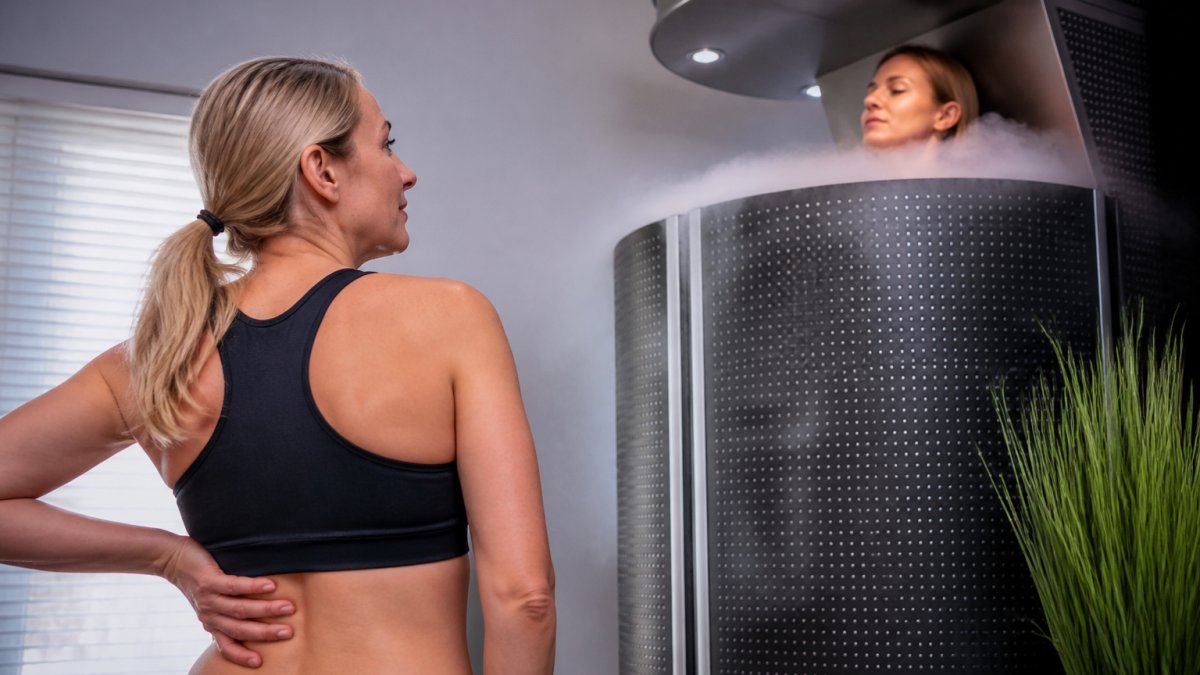
Whole-body cryotherapy is a short exposure to very cold air, usually in a cryo-chamber, that drops skin temperature fast. Blood vessels narrow, then widen again once you step out. That cycle is what drives the recovery benefits people come for.
A session is brief by design. You stand in the chamber for a few minutes, not twenty. The cold is dry, not wet, so it feels different from an ice bath.
Localized Cryotherapy vs. Cryo-Chamber Sessions
Localized cryotherapy targets one area, like a sore knee or shoulder, with a device that cools the skin directly. Cryo-chamber sessions cool your whole body at once.
The timing rules differ. Localized treatment can happen several times a day for pain relief. Whole-body sessions need more spacing, because your body needs time to respond. If you are managing a specific injury, ask which type fits your situation before you book.
Cryotherapy Timing by Goal: A Decision Guide
Match the session to your goal first, then pick the clock time. This is the part most guides skip, and it is where timing actually pays off. The table below maps each goal to a timing window, the mechanism that makes it work, and the trade-off to watch for.
Your Goal | Best Timing | Why It Works | Trade-Off to Watch |
Muscle recovery after training | Within a few hours after exercise | Cold reduces blood flow to working muscle, which can ease swelling and soreness during the early inflammatory window | Immediate post-lifting cold may blunt some muscle-building signaling (see the strength-training section below) |
Energy and alertness | Morning, ideally within an hour of waking | Cold exposure activates the sympathetic nervous system and raises norepinephrine, which drives the alert, focused feeling | Some people feel jittery or cold-sensitive first thing; eat lightly beforehand |
Chronic pain management | Evening, 2-4 hours before bed | Cold can calm nerve signaling and muscle tension, helping you wind down without the post-session alertness that disrupts sleep | A session too close to bedtime can leave some people wired rather than relaxed |
Injury rehab support | Consistent daily slot, coordinated with physical therapy | Steady timing lets you and your therapist compare response session to session | Localized cold is usually the better fit for a specific injury than a whole-body chamber |
General wellness | Whatever time you will actually keep | Consistency beats the perfect hour because your body adapts to a predictable routine | Skipping sessions to chase an 'ideal' time defeats the purpose |
A common mistake is chasing the "perfect" time and skipping sessions because of it. A steady routine at a good-enough hour beats an ideal schedule you never follow.
How the timing differs by method
The goal table assumes whole-body cryotherapy, but the method changes the timing rules:
Whole-body cryo-chamber: short exposures of about 3-4 minutes; space sessions out because the systemic response takes time to resolve.
Ice bath or cold plunge: colder and wetter than a chamber, so the cold hits harder; keep exposures shorter and avoid stacking one right after another.
Cold shower: milder and easier to fit into a morning routine, but the shorter, less intense exposure means the alertness effect is gentler.
Localized ice or gel packs: can be applied several times a day for a specific area, typically in shorter intervals, and are the usual choice for injury rehab timing.
Pro Tip If your goal is alertness, a cold shower in the morning is a low-cost way to test whether cold exposure suits you before booking a chamber session.
A simple way to test your timing
Rather than accepting one universal "best" time, run a two-week experiment: pick one goal from the table, hold the same time slot for seven sessions, and log energy, soreness, and sleep. Then shift the slot by a few hours for the next seven and compare. Your own pattern is more useful than any generic chart.
Cryotherapy Before or After Workout: Which Order Works
Post-workout cryotherapy is the better default for most people. Cold therapy after exercise helps calm muscle soreness and supports recovery, which is why so many athletes schedule it after training.
Pre-workout sessions are less common. A short blast of cold can leave you feeling sharp and alert, but it may also reduce the warm, loose feeling you want before heavy lifting.
Here is how we would think about it:
After strength training: wait a few hours if building muscle is your main goal
After endurance work: a session within a few hours is fine
Before a competition: a brief morning session can sharpen focus
On rest days: any time that fits your routine
Timing Around Strength Training and Adaptation
This is the nuance most people miss. Cold exposure right after lifting may blunt some of the muscle-building signals your body sends during recovery (pubmed.ncbi.nlm.nih.gov). If you are training for strength or size, give yourself a gap of several hours before a whole-body session.
If your goal is feeling less sore and training again sooner, post-workout timing works in your favor. Know which outcome you want before you pick the slot.
Morning vs Evening Cryotherapy
Morning sessions suit people who want an energizing effect to start the day. The cold exposure can leave you feeling awake and focused, which makes it a natural fit before work or a morning workout.
Evening sessions fit a different goal. If you deal with chronic pain or muscle tension, a session a few hours before bed can help you settle. Many clients tell us it becomes part of their wind-down routine.
Neither slot is "correct." Pick the one that matches your goal and your schedule, then keep it steady for a few weeks so you can judge how your body responds.
How Long Does a Cryotherapy Session Last?
A whole-body cryotherapy session lasts about 3 to 4 minutes in the chamber. That short window is normal and intentional. The cold is intense, and a few minutes is enough to trigger the response.
Localized cryotherapy can run longer, often 10 to 20 minutes depending on the area being treated. Your total visit, including check-in and changing, usually takes longer than the session itself.
Session frequency matters too. Many people go a few times a week, while others come daily during a recovery push. Ask what schedule fits your goal rather than guessing.
What to Do Before Cryotherapy
Arrive dry, hydrated, and dressed for cold. Moisture on the skin makes the cold bite harder, so towel off fully before you step in. Drink water beforehand and skip lotions on the day of your session.

A few preparation habits make sessions safer and more comfortable:
Hydrate before and after, since cold exposure and sweating both cost you water
Skip alcohol beforehand, as it affects how your body handles temperature
Eat lightly rather than on a full or empty stomach
Wear the provided protection for hands, feet, and ears
Keep moving in the chamber so cold air does not pool around you
Safety and Medical Considerations by Timing
Talk to your doctor before starting cryotherapy if you have heart conditions, high blood pressure, or circulation problems. Cold exposure is not right for everyone, and a quick check with a professional is worth it.
Timing plays a safety role too. Avoid a session right after alcohol or when you are overheated and dehydrated. If you feel dizzy or numb beyond the normal skin sensation, tell staff and stop. Safety precautions come before any schedule.
Tracking Your Response and Adjusting Your Schedule
Keep a simple log for two to three weeks and let your body tell you what works. Note the time of day, how you felt before, and how you felt a few hours after. Patterns show up fast.
Watch for these signals:
Energy: did the session wake you up or wind you down?
Soreness: did muscle soreness ease faster than usual?
Sleep: did you rest better that night?
Skin: any lasting irritation means you need to adjust
If morning sessions leave you wired at night, shift them earlier. If evening sessions disrupt sleep, move them to the afternoon. The best time of day for cryotherapy is the one your own log supports, not a generic chart.
At FloatWell, we walk clients through this tracking so the schedule fits their recovery, whether that is post-accident care or athletic training. We accept HSA cards and bill MVA insurance for car accident recovery, which makes a steady routine easier to keep.
Frequently Asked Questions
What is the best time of day for cryotherapy?
There is no single best time for everyone. Cryotherapy timing should match your goal. If you want an energizing start, a morning session fits well. If you are using it for muscle recovery after exercise, schedule it within a few hours of your workout. For pain relief from chronic conditions, many people find a consistent time each day works best. Track how you feel after sessions at different times to find your own pattern.
Should I do cryotherapy before or after a workout?
Cryotherapy before or after workout depends on what you want. A short pre-workout session can leave you feeling alert and ready to move, though it may reduce the warm-up effect. Post-workout cryotherapy is more common for muscle soreness and recovery. If you are training for strength gains, keep in mind that cold exposure right after lifting may blunt some adaptation signals, so many athletes wait several hours or use it on rest days instead.
How long does a cryotherapy session last?
A whole-body cryotherapy session typically lasts 2 to 4 minutes in the cryo-chamber, with the full visit including check-in, changing, and warm-up taking 15 to 30 minutes. Localized cryotherapy, such as an ice pack or gel pack applied to one area, usually runs 10 to 20 minutes. Session frequency varies by goal, often several times a week for recovery or pain relief. Ask staff at your facility for guidance based on your situation.
What should I avoid doing before cryotherapy?
Skip lotions, oils, and moisturizers on your skin before a session, since damp or oily skin can increase skin sensation in very cold temperatures. Avoid alcohol beforehand and do not go in on an empty stomach if you are prone to feeling lightheaded. Wear dry, loose clothing and remove jewelry and metal. If you have a heart condition, uncontrolled blood pressure, or are pregnant, talk to a qualified professional before booking.
Finding your ideal cryotherapy schedule takes a little trial and error, and that is normal. FloatWell offers cryotherapy alongside float therapy, infrared saunas, and red light therapy, all in one place, with HSA card acceptance and MVA insurance billing to keep recovery accessible. Book an appointment with FloatWell and let our team help you build a routine that fits your goals.
Book an Appointment

Comments