Is Float Therapy Safe for Pregnant Women? A 2026 Review

Table of Contents
What the Research Says About Float Therapy and Pregnancy
Benefits of Float Therapy During Pregnancy
Relieving Back Pain and Joint Pressure
Reducing Stress and Improving Sleep
Prenatal Float Therapy Precautions You Should Know
Temperature Regulation and Safety
Contraindications and When to Avoid Floating
How to Prepare for a Float Session While Pregnant
Trimester-Specific Considerations for Float Therapy
Hygiene and Water Quality Standards in Float Tanks
Why the Salt Matters, and What It Does Not Do
The Three Disinfection Systems You Will See
What to Ask Before You Book
Infection Risk in Context
Postpartum Recovery and Beyond: Extended Benefits
Frequently Asked Questions
Last Updated: September 29, 2026
What the Research Says About Float Therapy and Pregnancy
Is float therapy safe for pregnant women? Based on current evidence, float therapy is generally considered safe for most pregnant women after clearance from their OBGYN, though research specific to pregnancy remains limited. FloatWell, a wellness spa in Vancouver, WA, provides recovery and relief through scientifically proven techniques and technologies.
The therapy itself is straightforward: you float in a shallow pool of skin-temperature water saturated with Epsom salt, which creates enough buoyancy to support your body without pressure on joints or muscles. The American Pregnancy Association's guidance on prenatal wellness therapies notes that complementary therapies can support comfort during pregnancy when discussed with a care provider first.
What most guides get wrong is treating "safe" as a simple yes or no. The real answer depends on your trimester, your specific risk factors, and how the facility manages water temperature and sanitation.

Benefits of Float Therapy During Pregnancy
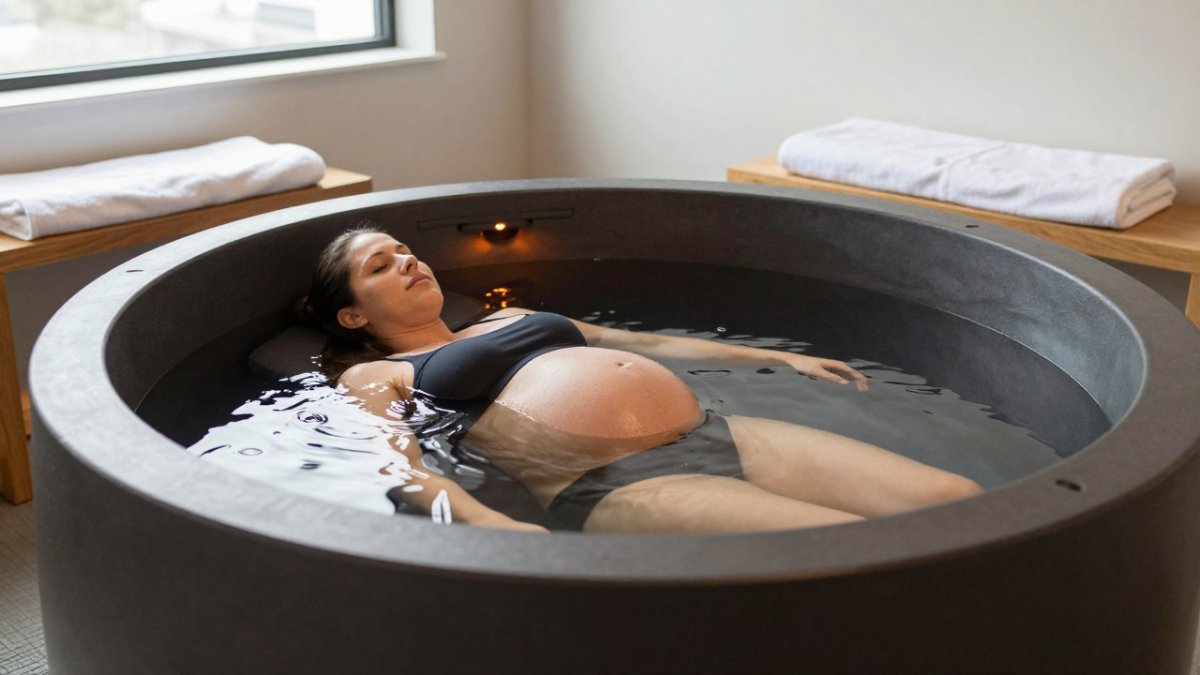
Weightlessness is the headline benefit. As the uterus expands, the lower back, hips, and pelvic floor carry increasing load, and floatation removes most of that gravitational pressure for the length of a session.
Many women report that the sensory-reduced environment also quiets the mental chatter. The magnesium-rich Epsom salt water may support magnesium absorption through the skin.
Relieving Back Pain and Joint Pressure
Back pain affects a large share of pregnancies, particularly as the center of gravity shifts forward and the lumbar spine compensates. Floating lets the spine decompress without the compression that comes from lying on a mattress.
For readers dealing with chronic tension or injury recovery, FloatWell offers float therapy alongside cryotherapy, infrared saunas, and red light therapy, and the facility bills MVA insurance for those recovering from car accidents.
Reducing Stress and Improving Sleep
Cortisol, the body's primary stress hormone, tends to rise with poor sleep and physical discomfort, creating a loop that's hard to break. The deep relaxation that floatation encourages may help interrupt that cycle.
Most people who benefit notice cumulative effects across several sessions.
Prenatal Float Therapy Precautions You Should Know
Temperature control and contraindication screening are the two areas where prenatal floating differs most from a standard session. Get either wrong and the risk profile changes.
Temperature Regulation and Safety
The core concern in pregnancy is maternal core temperature, not water temperature alone. The American College of Obstetricians and Gynecologists advises pregnant women to avoid raising core body temperature above roughly 102.2°F (39°C), which is why hot tubs, saunas, and steam rooms carry caution.
A properly maintained float tank works differently. The water is set to skin temperature, typically around 93.5°F to 95°F (34°C to 35°C), which is below core temperature and does not drive heat into the body the way a 102°F hot tub does. The high Epsom salt concentration also raises the water's density, so you rest at the surface with your face and belly clear of the water rather than submerged to the neck.
That said, "neutral" is a narrow band. Ask the facility to confirm the set temperature before you get in. If it feels warm rather than neutral to the touch, reschedule.
Practical guardrails for a prenatal float:
Consider a shorter session for your first visit
Keep your head and upper chest above the waterline
Leave the tank lid open or cracked for airflow if the room feels stuffy
Get out immediately if you feel lightheaded, flushed, nauseated, or short of breath
Hydrate before and after, floating does not make you sweat visibly, but you still lose fluid
Watch Out Overheating in the first trimester is the period of greatest concern because neural tube development is underway. If you are in your first trimester and unsure about tank temperature, wait until you have cleared it with your OBGYN.
Contraindications and When to Avoid Floating
Skip floating if you have an open wound, an active skin infection, a recent ear infection, or a fresh tattoo.
Watch Out Never book a float session during pregnancy without telling your OBGYN. A provider who knows your history can flag contraindications that a spa intake form will not catch.
How to Prepare for a Float Session While Pregnant
Preparation is mostly about timing and logistics. Eat a light snack an hour or two before, avoid caffeine, and use the restroom immediately before your session since you'll be in the tank for an extended period.
Book a shorter session for your first visit
Tell staff you're pregnant at check-in
Request a tank with easy access if you're in the third trimester
Keep a water bottle nearby for after
Trimester-Specific Considerations for Float Therapy
Each trimester changes what's comfortable and what's prudent. The first trimester often brings fatigue and nausea, and some women find the motion of getting in and out of a tank unappealing during that window.
Trimester | Key Consideration | Practical Adjustment |
First | Fatigue, nausea | Shorter session, morning booking |
Second | Generally most comfortable | Standard session length works well |
Third | Balance, frequent urination | Easy-access tank, shorter session |
Hygiene and Water Quality Standards in Float Tanks
Water quality is where a facility either earns trust or loses it, and it is the single most common reason pregnant women hesitate to book. Here is what actually happens inside a tank and what to verify before you get in.
Why the Salt Matters, and What It Does Not Do
Float tanks are saturated with Epsom salt (magnesium sulfate). That density is what creates buoyancy, but it also creates an environment where many bacteria and pathogens struggle to survive. High salinity draws water out of microbial cells through osmosis, which inhibits growth.
The Three Disinfection Systems You Will See
Reputable facilities typically combine filtration with one or more of the following:
UV (ultraviolet) light, water passes through a chamber where UV-C light damages the DNA of bacteria, viruses, and some parasites, preventing them from reproducing. UV is effective against many waterborne pathogens but does not kill everything, and it works only on water that passes through the chamber.
Ozone (O3), ozone gas is injected into the water as a powerful oxidizer that breaks down organic contaminants and microorganisms. Ozone is typically paired with UV because the two cover different gaps.
Hydrogen peroxide (H2O2), added at low concentrations as a residual disinfectant that keeps working in the water between treatments. It is the closest thing to a continuous sanitizer in a float tank.
What to Ask Before You Book
A facility that maintains its tanks properly will answer these without hesitation:
What disinfection system do you use, and is it running between every session?
What micron rating is your filter, and how often is it serviced?
How often is the water fully drained and replaced?
Do you test and log water chemistry daily, and can I see the log?
Is the tank drained and cleaned between clients, or only at end of day?
Infection Risk in Context
Pro Tip Before booking, ask two questions: what disinfection method is used, and how often is the water changed? A facility that answers without hesitation is usually one that maintains its tanks properly.
Postpartum Recovery and Beyond: Extended Benefits
The benefits do not stop at delivery. Postpartum recovery involves its own set of physical strains, from surgical recovery to the musculoskeletal load of carrying and feeding an infant.
Frequently Asked Questions
Is it safe to use a sensory deprivation tank during pregnancy?
Float therapy is generally considered safe for pregnant women after the first trimester, but you should consult your OBGYN first. The buoyancy of the Epsom salt water reduces pressure on joints and can relieve back pain. However, avoid floating if you have certain complications like preeclampsia or open wounds. Always check with your healthcare provider to ensure it's appropriate for your specific situation.
What are the benefits of float therapy during pregnancy?
Float therapy can help alleviate back pain, reduce swelling, and improve sleep by promoting deep relaxation. The weightlessness decreases pressure on your spine and joints, while magnesium absorption may help with muscle tension. Many women also report lower stress levels and better mood. Always consult your doctor before trying it, especially if you have any high-risk conditions.
Are there specific trimesters when float therapy should be avoided?
Most providers recommend avoiding float therapy during the first trimester due to the lack of research and potential risks. The second and third trimesters are generally safer, but you should get clearance from your OBGYN. If you have a high-risk pregnancy or complications like placenta previa, floating may not be advised. Always prioritize medical advice over general guidelines.
How does magnesium absorption in float tanks affect pregnancy?
The Epsom salt (magnesium sulfate) in float tanks can be absorbed through the skin, potentially helping with muscle relaxation and reducing inflammation. Some women find it eases pregnancy-related aches. However, magnesium absorption is limited, and it's not a substitute for medical treatment. If you have any concerns about magnesium levels, talk to your doctor before floating.
What precautions should pregnant women take before booking a float session?
Before booking, consult your OBGYN to confirm it's safe for you. Choose a reputable facility that maintains proper water temperature and sanitation. Avoid floating if you have open sores, infections, or high blood pressure. Stay hydrated, and don't float on an empty stomach. Inform the staff about your pregnancy so they can assist you if needed.
Pregnancy changes what your body needs, and finding relief that does not rely solely on medication can be a challenge. FloatWell offers float therapy alongside cryotherapy, infrared saunas, and red light therapy, accepts HSA cards for treatments, and bills MVA insurance for car accident recovery. If you're ready to explore whether floating fits your prenatal or postpartum routine, book an appointment with FloatWell and get personalized guidance on what's appropriate for your situation.
Book an Appointment


Comments